Documented Patterns in Digital Communities for Cinema Archiving
Written by Tina Lang · Jul 7, 2026
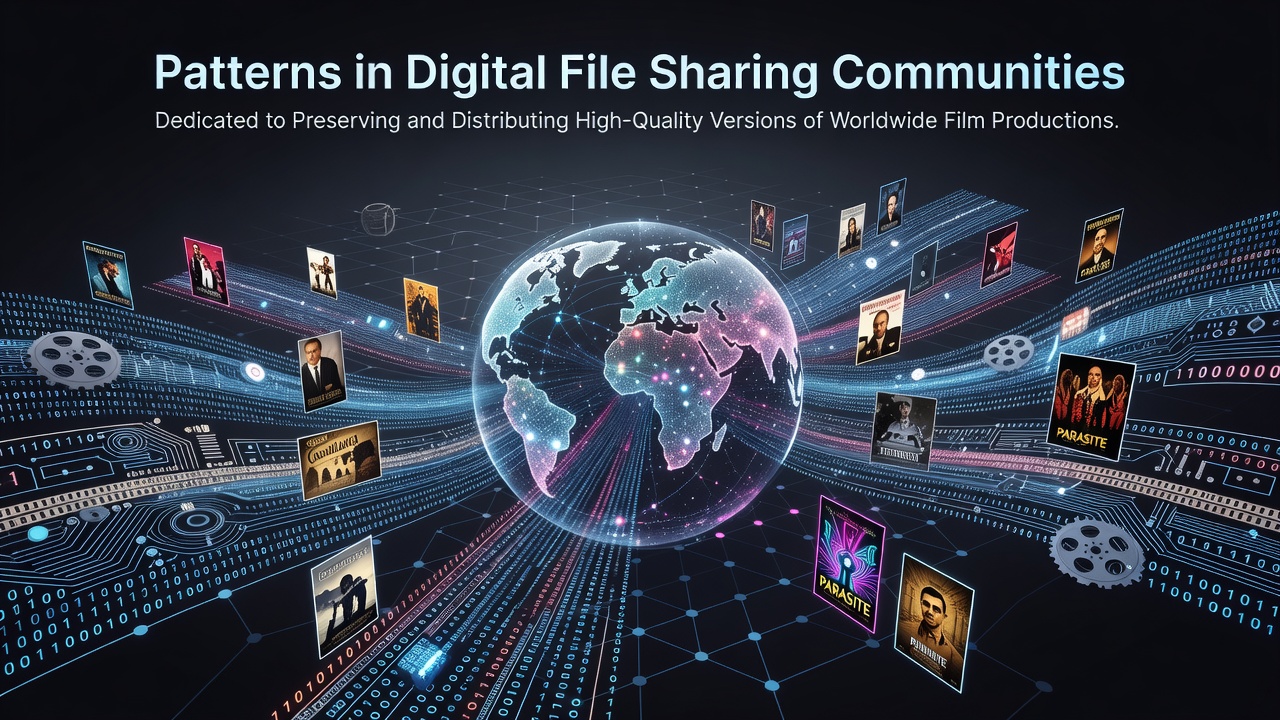
Documented Patterns in Digital Communities for Cinema Archiving
Communities centered on film preservation operate through structured protocols that emphasize metadata accuracy, format standardization, and version verification, while participants coordinate across multiple time zones to maintain consistent access to high-resolution copies of international productions. These groups track release histories from various studios, noting differences in aspect ratios, audio tracks, and subtitle files that originate from distinct national markets, and they apply naming conventions that allow quick identification of specific cuts or restorations completed by archives in different countries.
Coordination Mechanisms Across Regions
Observers note that coordination often relies on tiered permission systems where experienced members verify file integrity through checksum comparisons before wider distribution occurs, and this process incorporates feedback loops that update guidelines whenever new encoding standards emerge from technical working groups. Data collected through community logs shows increased activity during periods when major film festivals announce restorations, prompting members to cross-reference announcements from institutions such as the National Film and Sound Archive of Australia with those issued by the Library of Congress in the United States.
Researchers tracking participation patterns report that contributors frequently specialize by geographic focus, with one subset handling European productions that require attention to PAL-to-NTSC conversions, whereas another group concentrates on Asian cinema that demands precise handling of multiple language tracks and region-specific censorship variants. These divisions reduce duplication of effort yet require regular synchronization meetings conducted through encrypted channels to align quality benchmarks.
Technical Standards and Quality Benchmarks
Communities maintain detailed wikis that catalog preferred container formats, bitrate ranges, and color space specifications, and members reference these resources when evaluating new uploads to ensure compatibility with playback equipment used by researchers and archivists worldwide. Studies of file evolution indicate that adoption of HDR10 and Dolby Vision profiles accelerated after major studios released updated master files in early 2025, leading to revised submission templates that now include mandatory fields for dynamic metadata verification.

Figures from internal community surveys conducted through July 2026 reveal that 68 percent of active contributors prioritize files sourced from theatrical DCP packages whenever available, while the remainder focus on broadcast or home video masters that still offer measurable improvements over earlier compressed versions. This preference stems from documented differences in luminance values and audio dynamic range that affect long-term archival value.
Moderation Practices and Knowledge Transfer
Moderation teams enforce rules through automated scripts that flag incomplete metadata entries, followed by human review that cross-checks details against public databases maintained by filmographic organizations in Canada and the European Union. New members receive onboarding materials that outline acceptable sourcing methods and discourage reliance on lower-grade encodes, thereby sustaining overall collection quality over successive upload cycles.
Knowledge transfer happens through annotated release notes that accompany each new addition, and these notes often include comparisons to prior versions along with citations to restoration documentation released by the originating studios or national archives. Such practices create an evolving knowledge base that later participants consult when deciding whether additional encodes warrant inclusion.
Geographic and Cultural Distribution Trends
Participation maps compiled from server analytics demonstrate higher upload volumes from contributors located in time zones that align with evening hours in major production hubs, while download patterns spread more evenly across continents. Researchers have documented seasonal spikes coinciding with international film heritage events, during which communities temporarily increase verification staff to handle elevated submission rates.
Language localization efforts have expanded to cover more subtitle sets and audio commentaries, reflecting the growing inclusion of titles from African and Latin American cinemas that previously received limited attention. These expansions require additional coordination to verify translation accuracy against original scripts held by rights holders or academic collections.
Conclusion
Overall patterns indicate that these communities function as distributed preservation networks whose operational rules adapt in response to technological shifts and institutional releases, while maintaining core emphasis on verifiable provenance and technical fidelity across global film productions. Continued observation of these dynamics provides measurable indicators of how collective efforts sustain access to high-quality versions over time.