Subscription Platforms Expanding Film Reach and Boosting Local Productions Worldwide
Written by David Keller · Aug 23, 2026
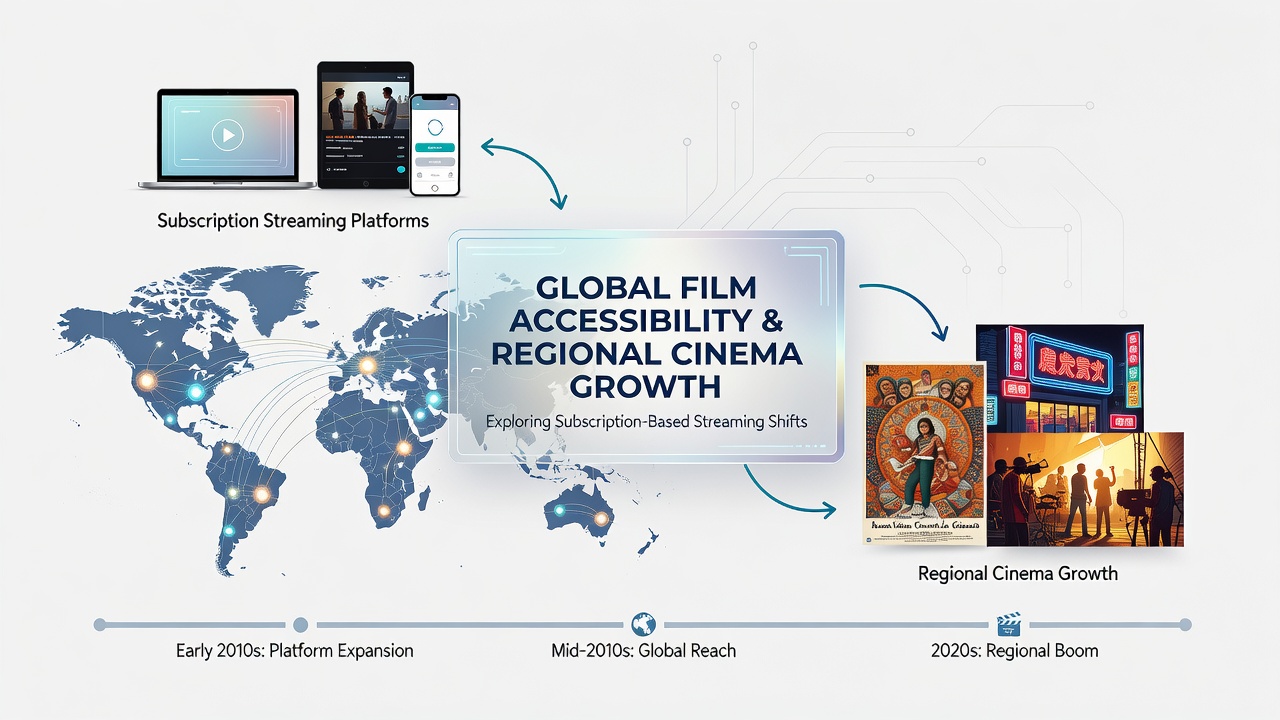
Subscription Platforms Expanding Film Reach and Boosting Local Productions Worldwide
Subscription-based streaming services have altered patterns of film distribution and consumption on a worldwide scale since the early 2020s, with fresh statistics released in August 2026 confirming expanded access in previously underserved territories while regional productions gain wider distribution channels. Observers note that monthly fee structures allow viewers in multiple countries to encounter international titles alongside domestic content without relying on physical media or one-time purchases, and this model continues to intersect with rising output from film industries in Asia, Africa, and Latin America.
Shifts in Access Patterns Across Borders
Data indicates that platforms operating under subscription frameworks reached over 1.2 billion paid accounts globally by mid-2026, according to figures compiled by the European Audiovisual Observatory, which tracks audiovisual trends across member states and partner nations. Viewers in urban centers from Mumbai to São Paulo now encounter libraries containing both Hollywood releases and locally produced features within the same interface, while rural areas benefit from mobile-optimized apps that reduce previous barriers tied to cinema infrastructure. Researchers at the University of Sydney documented how these services lowered entry costs compared to traditional theatrical windows in several markets, allowing simultaneous or near-simultaneous availability that shortens the gap between premiere and home viewing.
Yet the expansion carries regional variations because licensing agreements differ by territory, with some governments imposing content quotas to protect domestic creators. In Canada, for instance, recent regulatory updates require certain percentages of featured programming to originate from national producers, a policy that aligns with similar measures in Australia and parts of the European Union. These rules have prompted platforms to invest directly in local-language projects rather than solely importing established catalogs.
Regional Cinema Expansion and Investment Trends
Regional cinema sectors have recorded measurable growth alongside the subscription surge, particularly where platforms commission original series and films. Production budgets in Nigeria's Nollywood cluster increased by 18 percent between 2024 and 2026, with a portion of funding traced to co-production deals involving global streamers, while India's independent filmmakers report broader festival exposure after titles premiere on subscription services. Observers point to South Korea's sustained output of high-profile features that achieve simultaneous international reach through these channels, sustaining employment in post-production facilities and talent agencies.

One study released by the Asia-Pacific Film Commission in August 2026 examined twelve markets and found that subscription revenue streams now account for roughly 35 percent of financing for non-English-language features in those territories, up from 22 percent three years earlier. This shift has encouraged smaller studios to experiment with genres that previously struggled to secure theatrical distribution, such as science-fiction narratives rooted in local folklore or documentaries exploring indigenous communities. The same report highlights partnerships between platforms and national film funds in Brazil and Mexico that underwrite training programs for emerging directors and technicians.
Challenges in Content Discovery and Infrastructure
Despite broader availability, navigation remains uneven because recommendation algorithms sometimes prioritize globally recognizable titles over regional ones, according to user behavior analyses conducted by academic teams in multiple countries. Bandwidth limitations in parts of sub-Saharan Africa and Southeast Asia still constrain full-resolution streaming for households without fiber connections, although mobile data partnerships have mitigated some gaps. Regulators in several jurisdictions continue to examine pricing transparency and data usage practices to ensure equitable participation across income levels.
Industry organizations such as the International Federation of Film Producers Associations have compiled case examples where regional titles achieved unexpected cross-border audiences after appearing on subscription libraries, demonstrating that discoverability tools can amplify visibility when calibrated with cultural context. These successes have led some national broadcasters to adopt hybrid models that combine linear programming with on-demand subscription tiers.
Conclusion
Subscription streaming continues to influence both the reach of international cinema and the sustainability of regional production ecosystems, as evidenced by investment patterns and audience metrics documented through 2026. The interplay between platform economics, regulatory frameworks, and local creative output will likely shape further developments in how films travel and find viewers across diverse markets.